
Lodaer Img

Recovery of organic traffic after Google updates for the Georgian website Zoommer.ge

A decline in an electronics online store’s organic traffic after Google algorithm updates — a loss of nearly 50% of search traffic.

Client

A large chain of electronics stores with its own online shop, where a significant share of sales comes from Google search traffic.

Task

Recover the lost organic traffic after a Google update through technical website optimization.

Initial Situation

Before the Google update, everything was developing consistently. The catalog was expanding, new brands and product lines were appearing, organic traffic was steadily growing and bringing the company a tangible flow of customers. After the update, the traffic curve sharply went down, and we recorded a drop of about 50% in search sessions.

No full technical audit had ever been conducted as a separate project. If something broke, it was fixed, but no one was responsible for the overall picture. The homepage contained many promotional elements: sales, special offers, discounts, installment purchase options. For returning customers, this was sufficient. However, a new user saw an attractive storefront block but did not fully understand why this store should be trusted, how delivery works, what the warranty and return policy are, and what advantages the store has compared to other competitors.

When we went deeper, we discovered a typical picture of a large online store that had been developing for several years without systematic cleanup. The catalog contained:

  • page URLs with long parameters that were difficult to read for both users and search bots
  • different versions of the same pages, meaning clear duplicates
  • outdated promotional pages that were no longer relevant but were still indexed
  • broken links leading to errors
  • a large number of page variations created by filters, even though there was virtually no demand for them

Altogether, this looked like a website that had not been properly maintained for a long time. For Google, this is a signal that the resource needs attention, and in a competitive niche, the search engine always prioritizes sites that look cleaner and simpler.

Approach

Together with the client’s team, we agreed that simply adding new texts and increasing advertising spend made no sense. First, it was necessary to put the foundation in order, and only then think about scaling.

Conceptually, the plan consisted of three major blocks: technical diagnostics, cleanup and structure optimization, and identifying growth opportunities.

Step 1. Technical Diagnostics

First, we looked at the website through the eyes of a search engine crawler. We checked which pages were indexed, which were dropping out, where errors appeared, how redirects were set up, and which groups of pages were competing with each other.

Based on the results, we prepared a detailed list of tasks. At the top were issues that directly hindered indexing; below were problems that did not block visibility but negatively affected the overall picture.

Then the team moved on to implementation:

  • page URLs were simplified, unnecessary parameters were removed, and overly bulky ones were shortened
  • for key pages, a single canonical URL was defined, and all other versions were redirected to it
  • groups of pages with almost identical content were identified, and one main page was left in each group
  • outdated promotional pages were either completely closed from indexing or redirected to relevant catalog sections
  • a list of broken links was compiled and fixed step by step

After this cleanup, the site became more structured from a search engine perspective: less confusion and more clear signals about what is important and what can be ignored.

Step 2. Working with Filters and Indexation

Catalog filters help users find the right product, but they can generate thousands of technically unique yet unnecessary pages. This is especially noticeable in the electronics niche, where there are many products and even more characteristics.

We collected statistics on which parameters users actually use when searching for electronics. Most often, these were brand, approximate budget, usage scenario, and several key characteristics. Based on this data, we identified filter combinations that made sense as standalone pages and allowed indexation only for them.

All other variations remained available in the catalog for user convenience but were excluded from Google’s index. This significantly reduced the number of formally unique but essentially empty pages in search results and helped focus Google’s attention on pages that could truly bring visitors.

Step 3. Catalog Structure and Content on Key Pages

Once the main technical issues were resolved, we moved on to structure and content. The task was simple: users should quickly understand where they are and what step to take next, while search engines should easily recognize the page topic.

We reviewed how main sections and subsections were organized, moved the categories generating the most sales higher, and removed duplicate branches. At the same time, we updated headings and short descriptions in key sections. Instead of generic titles like “Product Catalog,” more specific options appeared, such as “Brand N Smartphones,” “Laptops for Work and Study,” or “TVs of a Specific Screen Size.”

On category pages, we added explanations in simple language. For example, what to look for when choosing a laptop for studying, how different smartphone lineups differ, and which parameters matter for TVs. For users with limited technical knowledge, this became a point of reference, and for Google, such content provided clear context for which queries the page should rank.

Results

After implementing the key changes and updating Google’s index, the traffic trend gradually reversed. At first, it was a small but steady increase.

Within a few months, it became clear that:

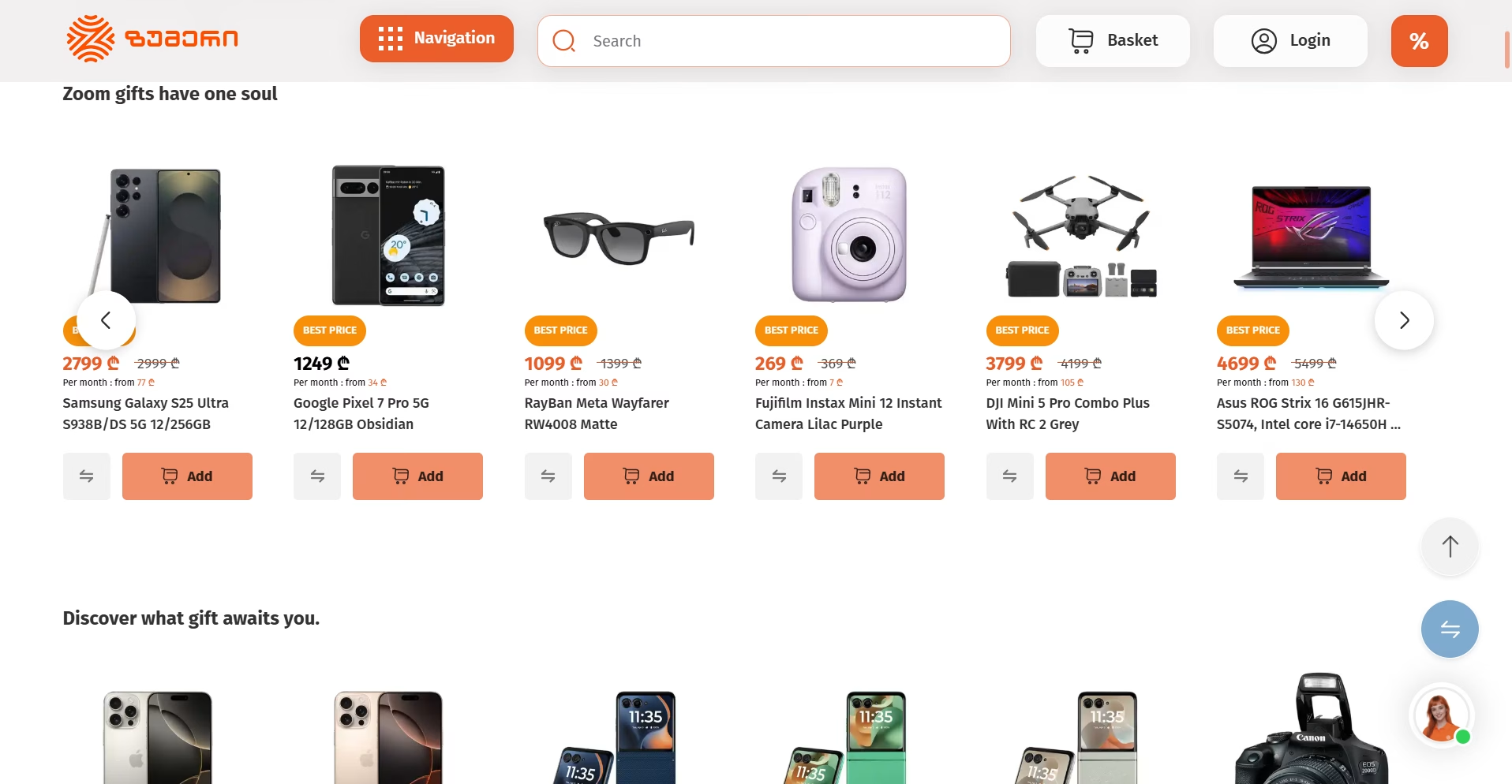
An electronics online store of a large retail chain, with organic Google search as the primary sales channel.
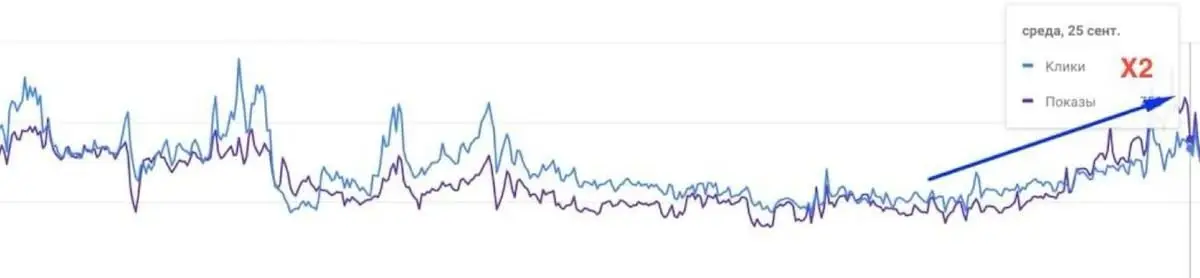
  • organic traffic from Google almost doubled compared to the lowest point
  • metrics returned to the levels observed before the algorithm update
  • dynamics became more stable: instead of a prolonged decline, there was controlled and predictable growth

For the business, this meant that:

  • the number of orders, calls, and inquiries from the website recovered
  • critical dependence on paid advertising decreased
  • it became possible to plan sales based on a stable organic channel
Growth of an online store’s organic traffic after SEO optimization, a technical audit, and improvements to the catalog structure.

In short, after the Google update, traffic dropped by about half, and after technical and structural work, we managed to recover almost all lost positions.

Next Steps

Together with the client, we agreed that traffic recovery is not the finish line but a new stage. Google’s algorithms continue to change, the product range is updated, and new promotions and special offers appear. To avoid repeating a sharp decline scenario, website work needs to shift into a continuous maintenance mode rather than one-time rescue operations.

The recommended approach includes:

  • regular technical audits with checks for duplicates, errors, broken links, and the impact of new promotional pages

  • monitoring organic traffic after major Google updates with quick responses to any anomalies

  • further development of structure and content: creating new landing pages for popular brands and usage scenarios, updating guides and informational blocks, and working with service-related content

This approach allows not only to maintain recovered positions but also to gradually increase organic traffic, making the business less dependent on advertising fluctuations and ongoing search algorithm changes.

The main reason was the accumulation of technical issues: duplicate pages, outdated promotional URLs, broken links, and a large number of filter-generated pages without real demand. All of this worsened indexation and reduced Google’s trust in the site.

The project started with a full technical website diagnostic: analyzing indexation, canonical URLs, redirects, and page competition. This made it possible to identify critical issues that directly hindered organic growth.

The team left only those filter combinations indexed that users actually searched for, while all others were closed from Google. This reduced the number of “empty” pages and helped concentrate search visibility on valuable catalog sections.

Within a few months, organic traffic from Google almost doubled from its lowest point and returned to pre-update levels. The business regained a stable flow of orders and reduced dependence on paid advertising.

Portfolio Details
  • Created By: Zoommer
  • Category:
  • Timeframe: September 25, 2024
  • Location: Georgian
Back To Top Img